Basic training under CAR-147
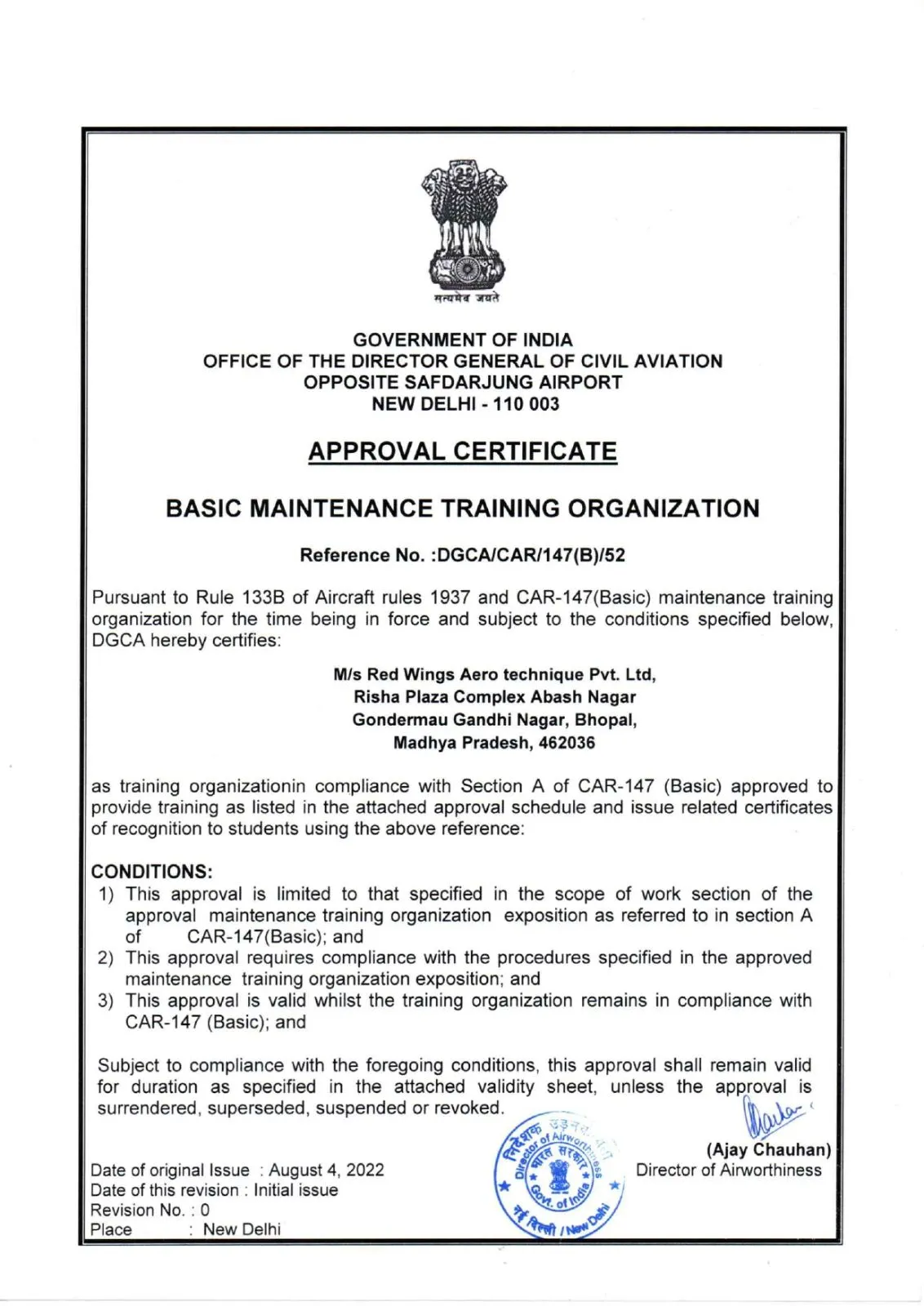
The Aircraft Maintenance Engineering course is a licence-oriented training programme. It prepares candidates to become eligible for the Aircraft Maintenance Engineer licence under the Aircraft Rules 1937 (Rule 61) and Civil Aviation Requirement CAR-66. Basic training is delivered by an organisation approved by DGCA under CAR-147.
What basic training covers
Basic training builds the foundation every aircraft maintenance engineer needs. It combines classroom theory with practical work in labs and workshops, in the stream you choose:
- Mechanical (Category A and B1): airframes, engines, and mechanical and electrical systems of aeroplanes or helicopters.
- Avionics (Category B2): aircraft instruments, electrical systems and radio-navigation systems.
The theory follows the DGCA CAR-66 modules, from electrical and electronic fundamentals to maintenance practices, human factors and aviation legislation. The minimum training hours for each category are set by CAR-147 and listed on our AME course page.
Labs and workshops
Practical training is where theory turns into skill. Training at Redwings uses:
- Engine systems lab and airframe systems lab
- Radio-navigation, electrical, instrument and battery workshops
- A general workshop with a lathe, grinder and welding equipment for basic fitting and fabrication skills
- Audio-visual classrooms and a library for study and module exam preparation
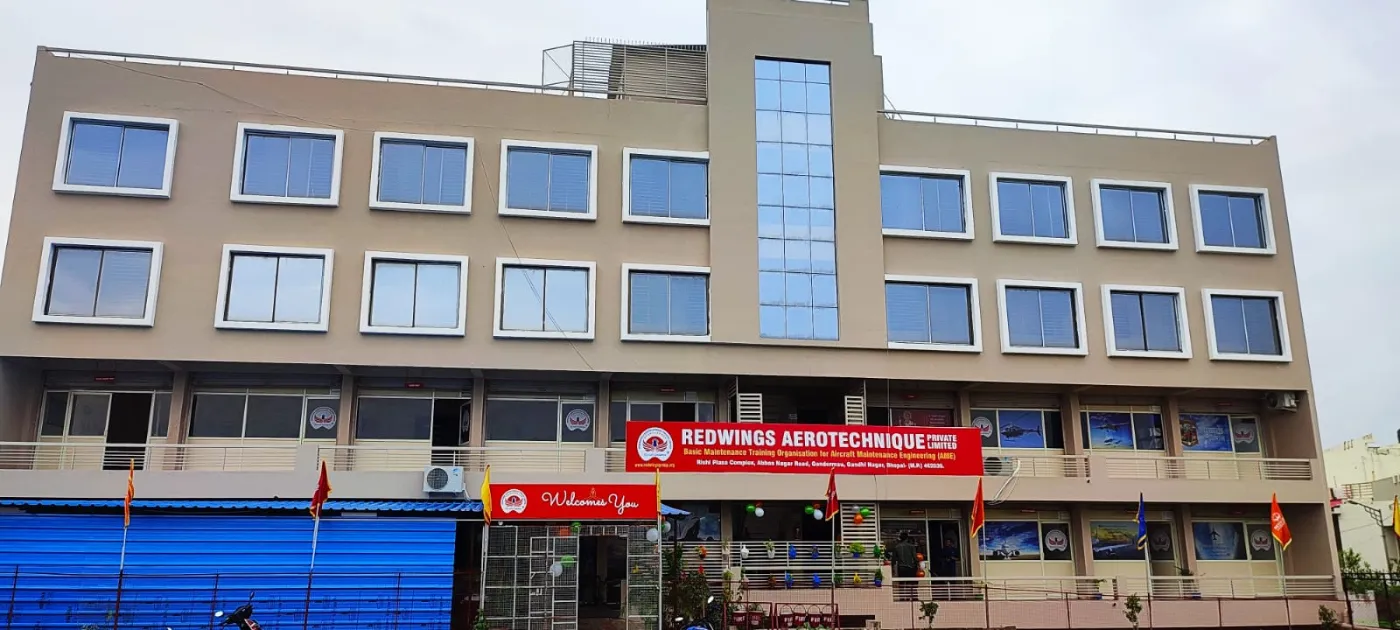
Students also learn from a working maintenance environment through the group's own DGCA-approved CAR-145 MRO. See our photo gallery for a look inside.
Making the most of basic training
- Keep up with the modules: each DGCA module exam builds on the last, so revise as you go rather than at the end.
- Treat workshops seriously: good habits with tools, documentation and safety now make you a better engineer later.
- Ask about real aircraft: connect every topic to the aircraft and maintenance work you see on hangar visits.
- Choose your stream with care: mechanical and avionics lead to different licence categories, so talk to our counsellors.
Eligibility
- 10+2 with Physics, Chemistry and Mathematics from a recognised board or university, or an AICTE-approved 3-year engineering diploma in any stream, or a higher qualification in science with PCM.
- No colour blindness, and assessed medically fit by a registered medical practitioner for the scope of work applied for.
Path to the AME licence
- Basic training at a DGCA-approved CAR-147 basic training organisation.
- Practical experience on operating aircraft at a DGCA-approved CAR-145 organisation, as required by CAR-66.
- Module examinations for the chosen stream and licence category, conducted by DGCA.
- Type training under CAR-147 with structured on-the-job training (S-OJT).
- AME licence in the respective category, issued by DGCA, Ministry of Civil Aviation, Government of India.
Admission
Admission to Redwings training programmes is through AMERAT. See Aircraft Maintenance Engineering for streams, licence categories and career scope.
Frequently asked questions
What is BAMTO?
What is CAR-147?
Which streams can I study?
What comes after basic training?
More AME guides
Ready to start your aviation career?
Register for AMERAT 2027 and take the first step.